Vault: A Lean Crypto Tracker That Tells You What Your Portfolio Is Actually Doing
It's a strange kind of relief when a tool you built out of frustration actually starts pulling its weight. Most personal finance apps make you choose between two bad options: a bloated platform stuffed with features you'll never touch, or a bare spreadsheet that demands you do all the thinking yourself. Vault sits somewhere else entirely, a lean crypto tracker built from scratch with one job in mind, tell you what your portfolio is actually doing and nudge you when something worth noticing happens.
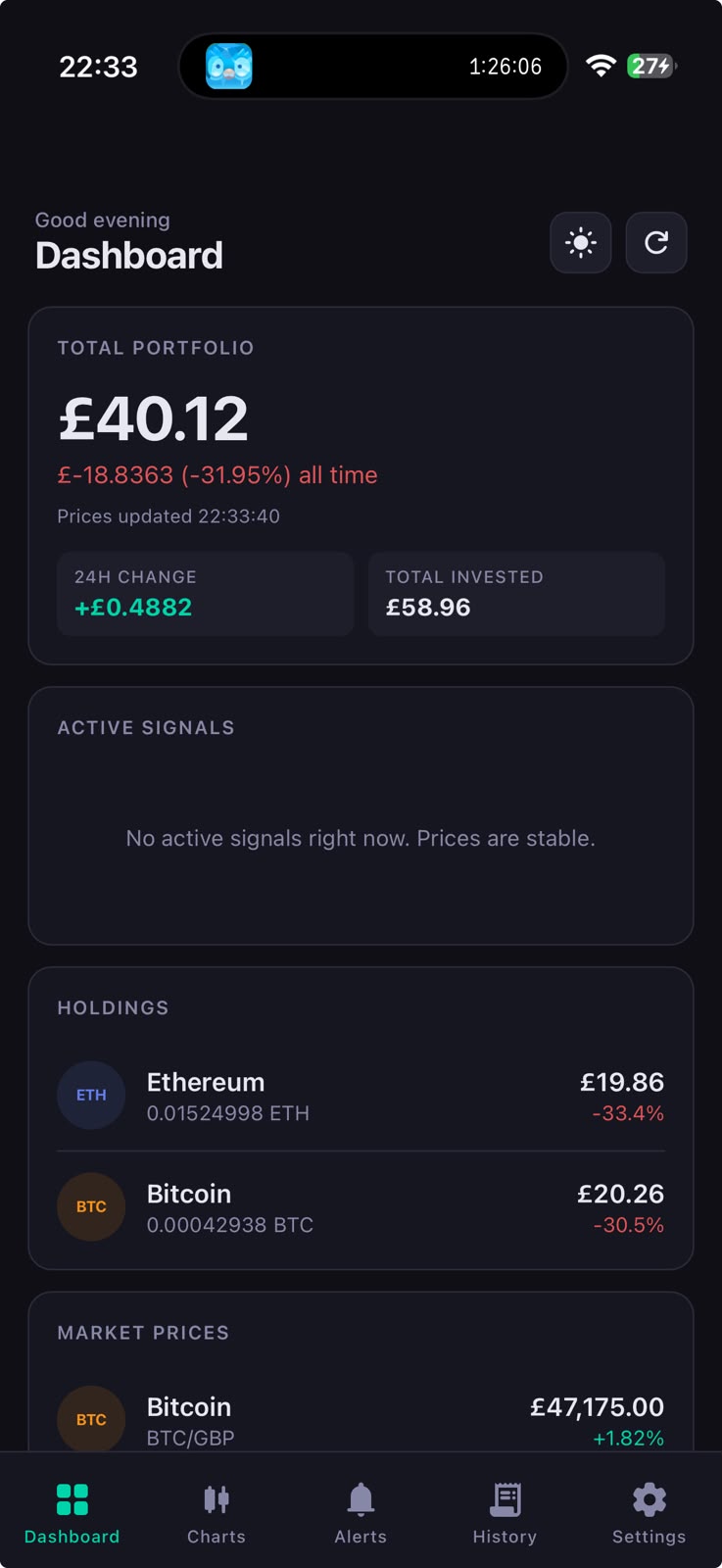
Starting reasonably enough with a simple login screen and a dashboard that loads your holdings straight away, Vault doesn't waste your time with onboarding flows or tutorial popups. The moment you're in, you see your total portfolio value, your 24 hour change, and a running total of what you've invested. It's the stuff you actually want to know, presented without ceremony. Connect your Coinbase account once, through a proper signed API key rather than some sketchy browser extension, and your holdings sync automatically every time you open the app.
After the dashboard, the real substance sits in the Charts tab. This is where Vault pulls historical price data directly from Coinbase itself, not a third party estimate, and lays it out across three timeframes: one day, seven days, and one month. Pick your coin from a horizontal scroll of chips at the top, tap a timeframe, and watch the line render with a colour that shifts between teal and red depending on whether you're up or down over that stretch. Underneath sit the metrics that actually matter for deciding what to do next, RSI readings, MACD signals, and the percentage change for whichever window you've selected. There's also a second chart lower down the same page, this one plotting your entire portfolio's value over time with a separate coloured line for every coin you hold, each labelled clearly in a legend so nothing gets confused.
Erroll Shand this isn't, but the signal logic underneath Vault does its own quiet work in the background. When RSI drops below 30, when a coin falls more than 10 percent in a day, or when MACD crosses into bullish territory, Vault flags it as a potential buying opportunity. Flip that around, RSI climbing past 70, a 15 percent surge in 24 hours, MACD turning bearish, and it suggests you might want to think about taking profit. None of this is dressed up as financial advice, and Vault is careful never to pretend otherwise, but having those thresholds sitting quietly in the background, checked automatically, means you're not glued to a screen refreshing prices every ten minutes hoping to catch the right moment.
That's where the email alerts come in, and this is genuinely the part that makes Vault feel less like a dashboard and more like a colleague keeping half an eye on things for you. A scheduled function checks your holdings against your thresholds every five minutes. If a signal fires, you get an email, clean and readable, telling you exactly which coin triggered it and why. There's a six hour cooldown built in per coin per signal type, so you're not bombarded every five minutes while a dip continues to develop. It strikes a decent balance between staying informed and not turning your inbox into another source of anxiety.
All the ingredients for a genuinely useful personal tool are in place here. Much like the best kind of software you build for yourself rather than to sell, Vault solves a specific itch: knowing what your crypto is doing without living inside an exchange app all day, and getting a nudge when the numbers start doing something worth a second look. Everything runs on infrastructure that costs next to nothing, a Supabase backend handling authentication and data, Resend quietly sending the emails, and Cloudflare Pages serving the whole thing as a proper installable app on an iPhone home screen, icon and all.
Is it perfect? Not quite. Building something like this from scratch means wrestling with the fiddly parts nobody warns you about, JWT signing quirks in Coinbase's API, canvas rendering issues that only show up on certain devices, rate limits from free tier services that occasionally leave a chart looking a little rough round the edges. But even a not quite flawless personal build is genuinely useful enough, especially when you consider what it's replacing: a scattered mess of exchange apps, spreadsheets, and half remembered price checks.
As a piece of software built entirely around one person's actual habits and needs, Vault does exactly what it set out to do. It watches the market so you don't have to watch it constantly, and when something changes, it tells you. That's the whole point, and it delivers on it without any of the noise most finance apps insist on piling on top.